
Paper Organization and Management 101
If your home feels like it’s slowly being overtaken by stacks of paper—bills, school notices, receipts, mailers, and business documents—you’re not alone. Busy families, especially those juggling entrepreneurship, know that paper clutter can quickly turn from manageable to overwhelming. But with the right systems, you can reclaim your counters, desks, and drawers while keeping your important documents organized and accessible.
Why I’m Writing About Paper Management
Before starting Green Mountain Space, I worked in corporate finance, where one of my primary responsibilities was document retention management. I either purged records that were no longer needed or prepared shipments to long-term storage facilities in compliance with FDIC regulations and record-keeping requirements.
Recently, multiple clients and even one of my team members shared the same sentiment: “Incoming mail and paper management are so hard to keep up with.” This inspired me to write this guide—because I understand both the stakes and the strategies that actually work. My goal is to help you feel empowered, efficient, and confident in managing the paperwork in your home or business.
Why Paper Organization Matters
Paper clutter isn’t just a visual nuisance—it can affect productivity, stress levels, and even your family’s finances. For parents managing kids’ schedules and entrepreneurs juggling business paperwork, a clear system allows you to:
Easily locate important documents when needed
Reduce stress caused by visual clutter
Keep sensitive information secure
Free up mental space for priorities like family time and business growth
A structured paper management system transforms what feels like chaos into efficiency and clarity.
TL;DR: Quick Paper Management Guide
Purge unnecessary mail immediately.
Set up a drop zone for items to process.
Dedicate weekly time to open mail, record actionable tasks, and update your calendar.
File important documents and toss completed items.
Review and refresh your filing system yearly.
Controlling Incoming Paper
The first step in managing paperwork is reducing what comes in. Think of it as preventing clutter before it starts.
Quick daily habits:
Sort mail immediately: Toss junk mail, irrelevant flyers, and outdated ads as soon as they arrive.
Go digital when possible: Switch bills, bank statements, school communications, and business invoices to paperless options.
Three simple steps to reduce incoming mail:
Opt out of marketing lists – Use DMAchoice or contact companies directly.
Remove your name from pre-approved credit offers – Visit OptOutPrescreen.com.
Contact local organizations – Unsubscribe from subscription services, community organizations, or charities to limit unnecessary mailings.
The less paper that enters your home, the less you have to manage each week.
Three Steps to Efficient Paper Management
Setting up a good filing system is key to success. I recommend a three-step approach for handling mail and incoming paperwork efficiently:
Step 1: Create a Drop Zone
Immediately purge unwanted mail into the trash or recycling. Then place everything else in your drop zone—a designated spot for items you need to deal with. Do not open the mail during this time.
Step 2: Weekly Paperwork Management Time
Set a weekly appointment on your calendar for up to one hour (time will decrease as you get into a rhythm). During this session:
Open all mail in the drop zone.
Identify actionable tasks and write them down on a notepad.
Add all actionable tasks to your calendar with deadlines.
Step 3: File or Toss
Once tasks are recorded and completed, file paperwork you need to keep in clearly labeled folders or storage systems. Toss anything no longer needed.
Pro tip: Yearly, revisit your filing system to retire outdated sections or create new categories for changing needs.
Additional Paper Management Tips
Centralize Your Paper: Keep one tray or basket for all incoming mail.
Go Digital Whenever Possible: Opt for online statements for bills, bank accounts, and school communications.
Batch Processing: Handle similar items together—bills, school papers, or business receipts.
Label Everything Clearly: Color-coded folders or tabs save time and prevent confusion.
Use Tools: Keep a pen, notepad, and calendar handy for actionable items as they come in.
Long-Term Storage & Maintenance
Even with a weekly routine, papers accumulate. For long-term storage:
File systematically: Categories like “Medical,” “School,” “Financial,” and “Business” help keep everything organized.
Digitize: Scanning documents ensures you always have access.
Review annually: Check for outdated documents, retire sections that are no longer needed, or create new sections as your family and business evolve.
For guidance on which financial or legal documents to keep, consult your local CPA. In Asheville, we recommend Austin CPA.
If Paper Feels Like an Ongoing Battle…
You are not behind. You are not disorganized. You just need a repeatable system.
Paper management should feel:
Predictable
Efficient
Timely
Calm
And when it does, you free up so much mental space.
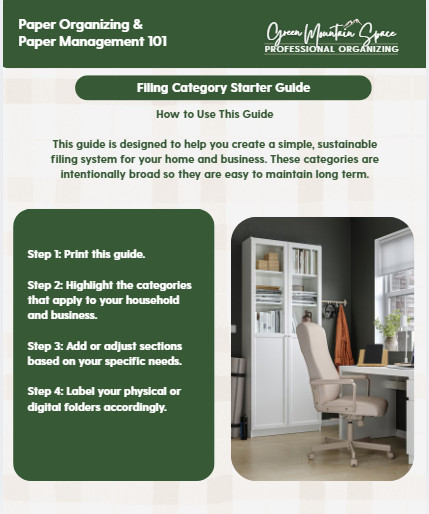
Grab the Free Filing Category Guide
If you’re not sure how to structure your filing cabinet, we created a Filing Category Starter Guide for busy families and entrepreneurs.
It gives you:
Household categories
Business categories
A simple structure
Download it here: Household and Business Paper Management Categories
Paper management doesn’t have to feel overwhelming. By controlling incoming items, creating a drop zone, setting a weekly paperwork session, and filing efficiently, you can reclaim both your home and your time.
Efficiency, clarity, and timeliness are the hallmarks of a good paper system. With the strategies outlined above, you’ll feel empowered, confident, and in control of your paperwork. If you are still feeling overwhelmed and need an extra set of hands to tackle your paper clutter schedule your organizing session with our team.