
How to Organize your Videography and Photography Equipment
When a videographer from Cherokee reached out to us about downsizing his studio, we knew this wouldn’t be a “quick tidy.” He specializes in personal documentaries and commercial work for Harrah’s Cherokee Casino, and his challenge was a familiar one:
How do you fit a professional-level business into a personal residence without sacrificing efficiency or creativity?
His studio was over an hour from Asheville, but after the initial consultation and reviewing the equipment list, we realized something important — to do this well, we needed expert input.
When Google Isn’t the Answer
There’s a point where internet research becomes overwhelming. Between constantly evolving technology, brand preferences, and niche workflows, it’s easy to go down a rabbit hole without clarity.
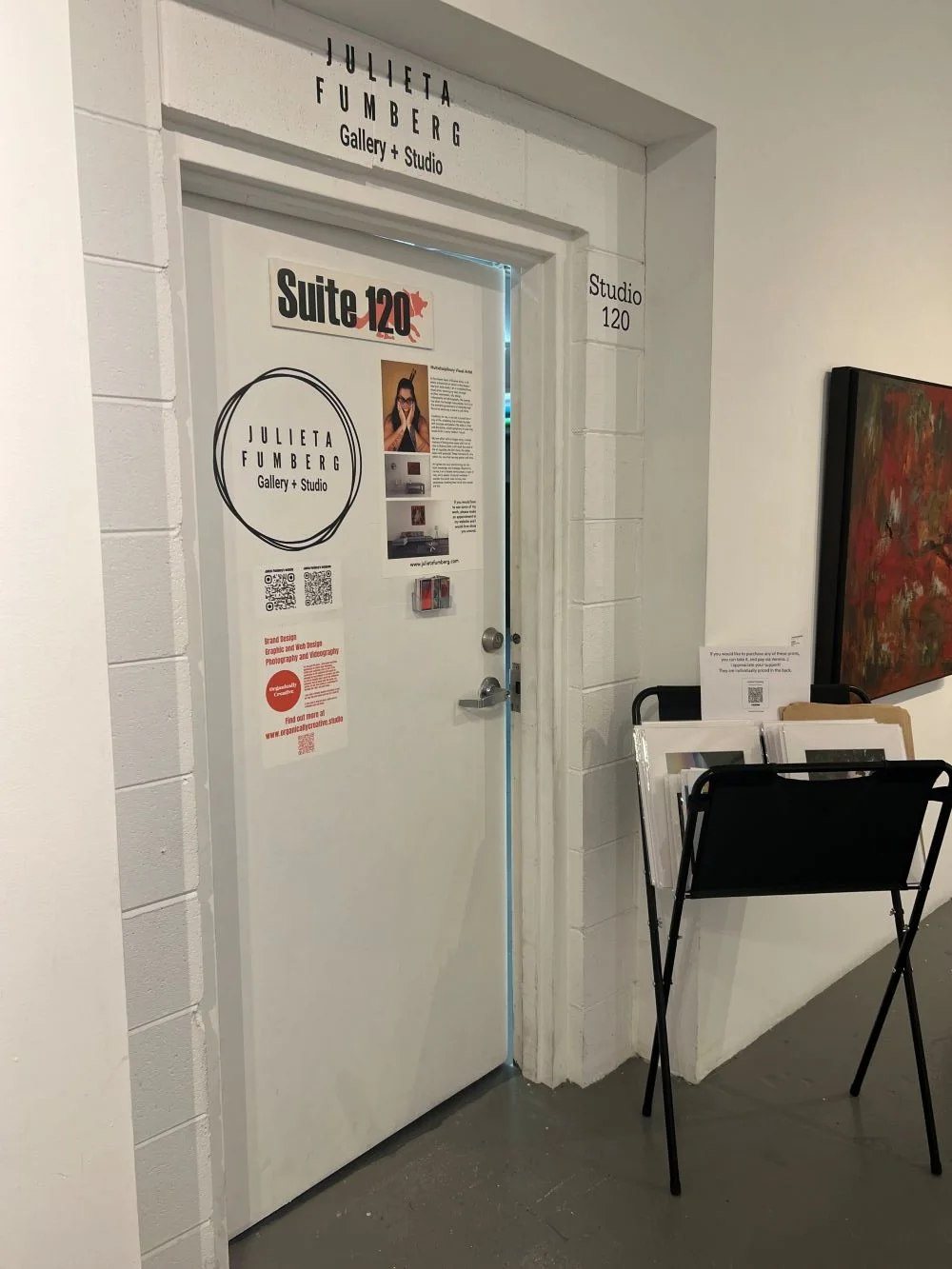
So instead of guessing, we did what we always do for our clients: we consulted a professional in the field. We reached out to Julieta Fumberg, a local Asheville-based videographer and photographer we’ve seen documenting Asheville Chamber events. We also knew of her through fellow photographer Carol Spagnoli, who specializes in headshots — and that kind of trusted creative overlap matters. Julieta graciously invited us into her studio to walk through her setup and explain what a videographer actually needs to produce excellent work. And honestly? As organizers, it was music to our ears.
You Don’t Need as Much as You Think
Julieta walked us through her equipment zones — where she films, edits, stores gear, and preps for shoots. What stood out most was this simple truth:
You don’t need a lot — you need the right things, stored well.
Like many creative industries, manufacturers constantly release upgrades. The good news? Equipment is getting better, smaller, and more travel-friendly. Julieta shared that she upgrades her gear every 4–6 years and resells older equipment through resale websites and local Facebook groups.
“It’s nice to have new equipment, but you have to be diligent about letting go of the older stuff. There are perfectly good, working cameras I love to sell to people who want to get started in photography.”
That mindset — intentional upgrading paired with intentional releasing — is exactly what makes organizing sustainable. Julieta isn’t just a videographer — she’s a storyteller. Her work includes:
Documentary-style videography
Brand and commercial video
Photography
Studio and on-location shoots
You can explore her work and full list of services at julietafumbergphotography.com.
If you’re ever in Asheville’s River Arts District, we highly recommend stopping by her studio. She is incredibly kind, generous with her knowledge, and a true professional. We’re so grateful for her time and expertise — it helped us give our Cherokee client the best possible organizing experience.
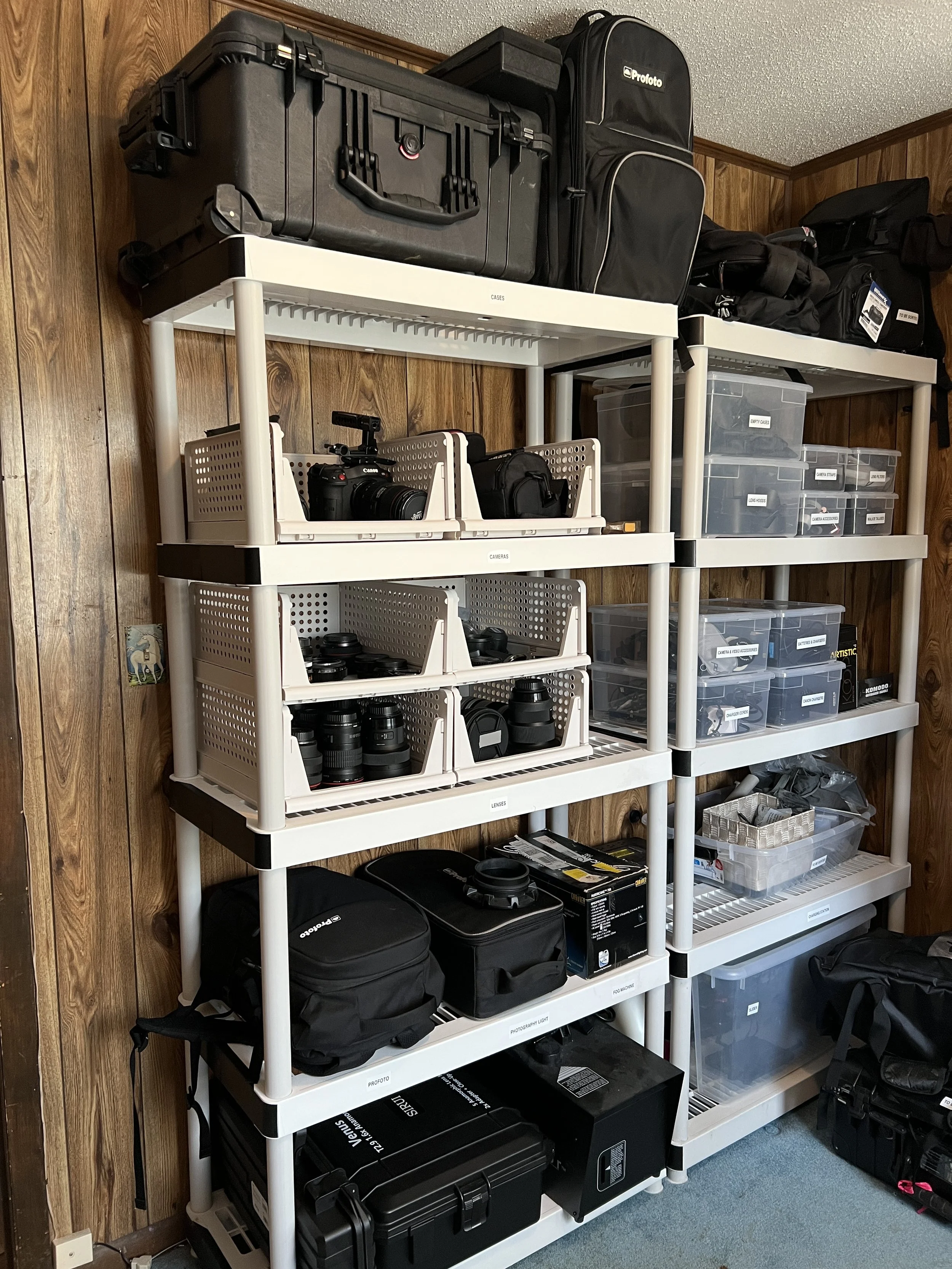
Grab and Go Camera Equipment Station
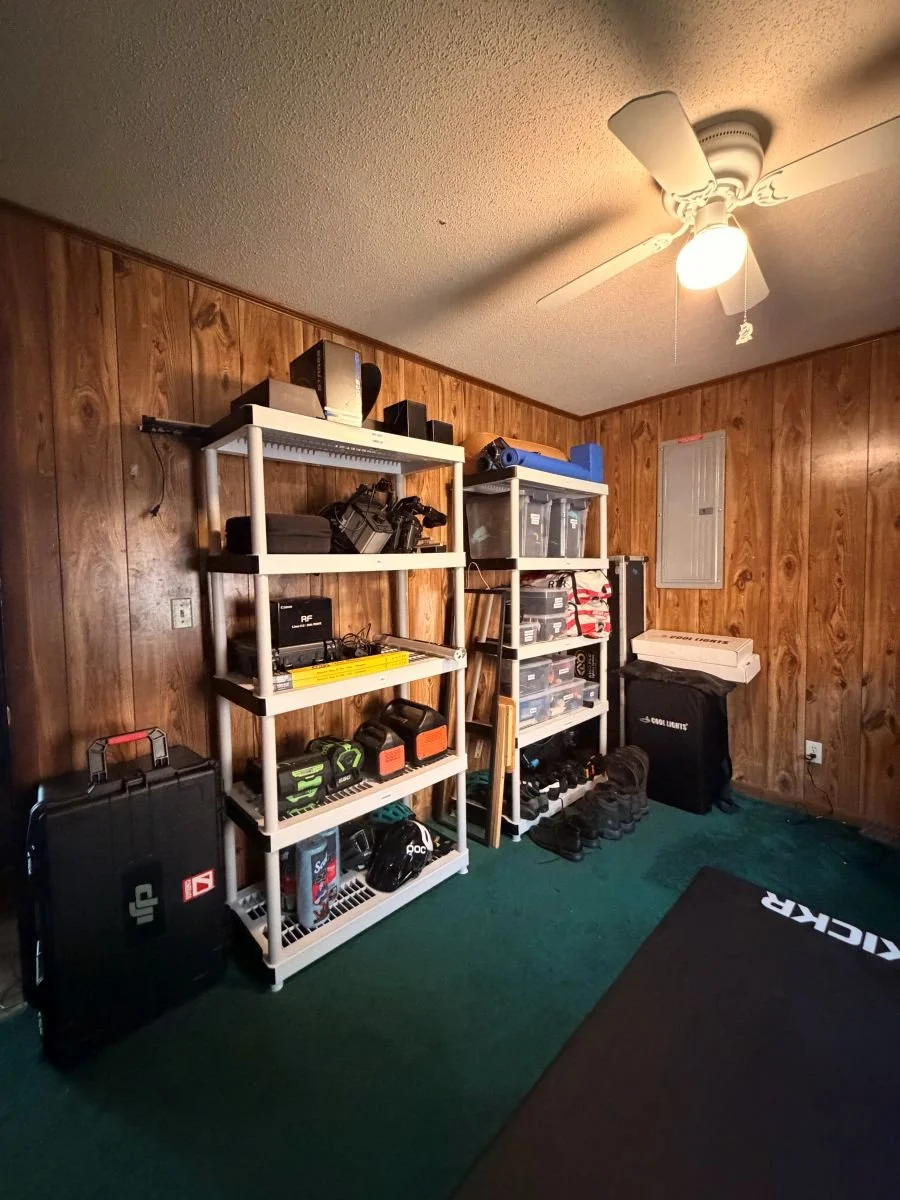
Seller’s Section of Camera and Video Equipment
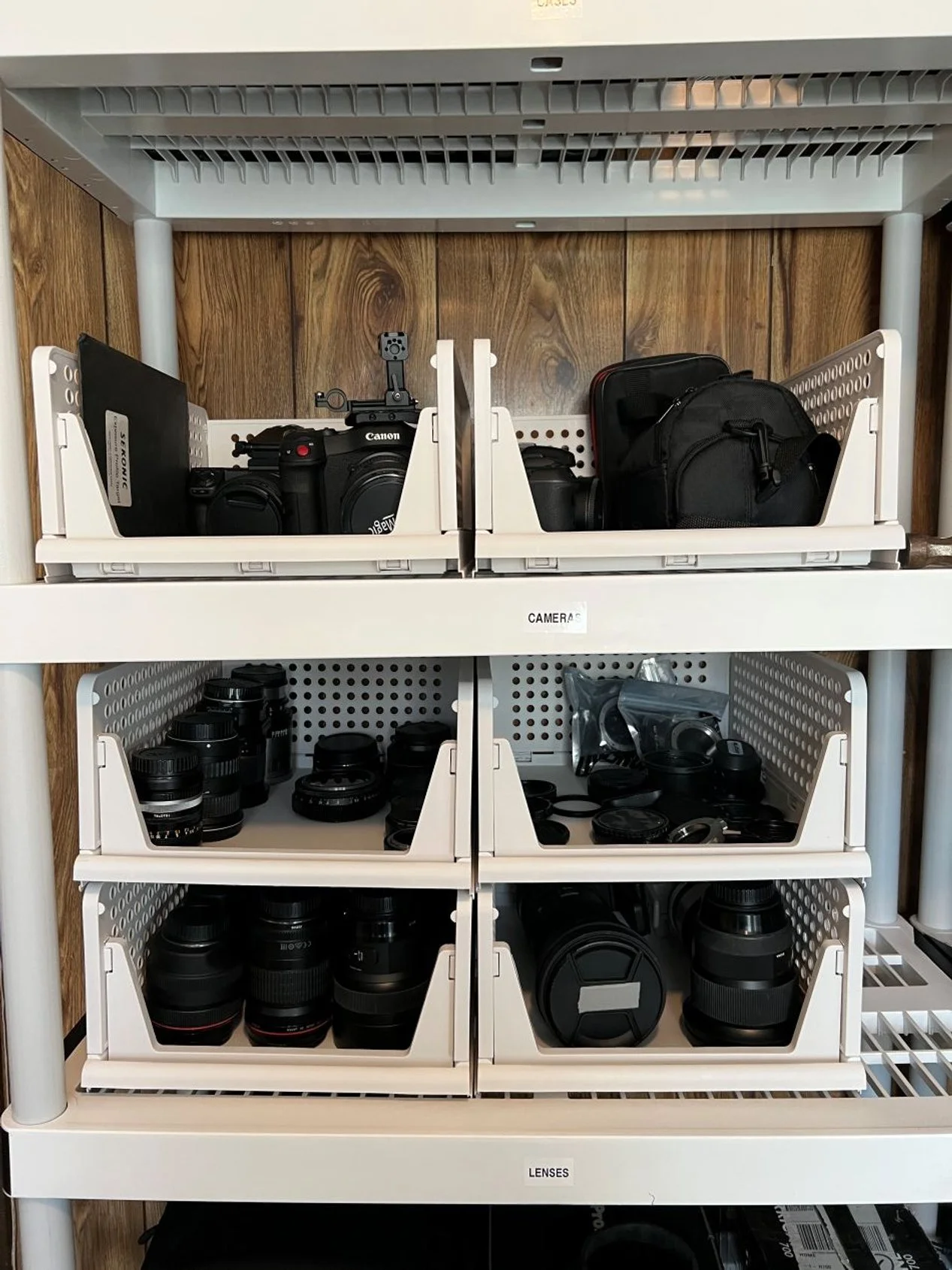
Stackable bins for easy camera lens access
How We Categorize Photography & Videography Equipment
Because we’re organizers, we never walk into a project without a plan. The goal is to maximize time, reduce decision fatigue, and create systems that support real workdays. Based on the consultation, studio visit, and equipment research, we created pre-organizing categories:
Equipment & Accessories
Lighting & studio gear (lights, V-flats, scrims, stands, cords)
Audio equipment (microphones, cords, audio accessories)
Camera & optics (camera bodies, lenses, lens accessories)
Power & storage (batteries, chargers, memory cards)
Cables & adapters (universal cables, adapters)
Transport & protection (soft cases, hard cases, backpacks)

Before Organization with Green Mountain Space
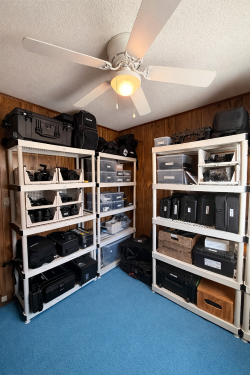
After Organization with Green Mountain Space
Zones for Maximum Efficiency
Once we knew what we had, we created functional zones to make production days seamless:
Grab & Go
Photography
Videography
Audio
Pack Outs
Lighting
Charging Station
Stands (C-stands & tripods)
Selling Section
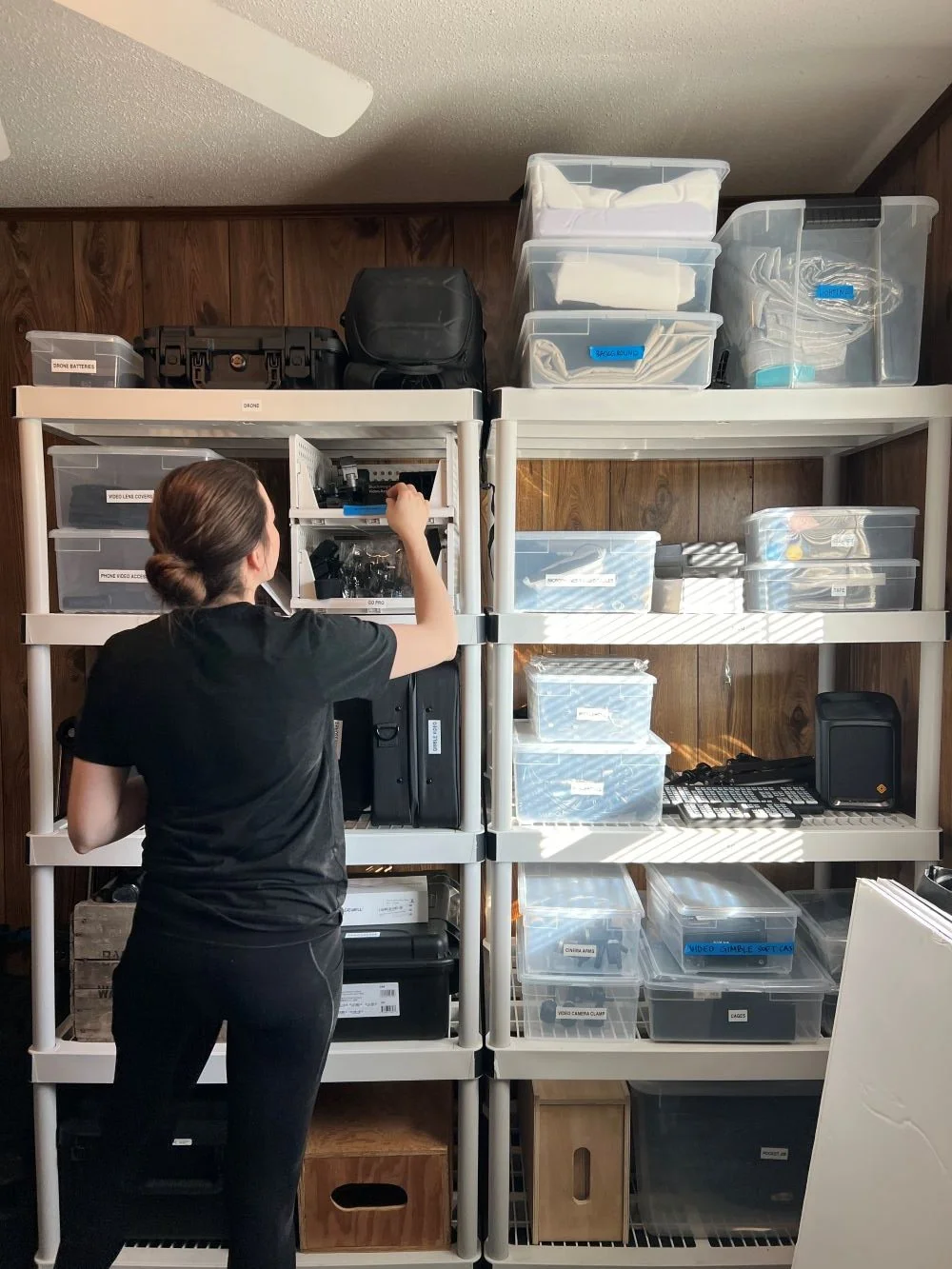
Within each zone, we included accessories, cables, chargers, and cleaning supplies.
We asked one simple question for each item: Does this have a case?
If it did, we identified where it belonged and contained it.
If it didn’t, we containerized it in our bins [link to bins].
The goal is ease of access — so when production day arrives, nothing slows you down. Our favorite organizational product? OUR Bins — they make storing, sorting, and transporting equipment simple and clean.
The Results
In just one day, with four organizers, we transformed two rooms and two closets. We:
Saved the client 28+ hours of work (research, planning, organizing, labeling donations, and discards)
Established a system that is easy to maintain
Created zones that support productivity and mobility
Every creative business can benefit from a tailored organizing plan. Whether you’re downsizing, expanding, or just tired of hunting for cords and chargers, we can help.
Book a consultation today and let us help you maximize your space, simplify your workflow, and reclaim your time.